

How Large Stone Commissions Are Shipped Overseas: Crating, Sea Freight, Insurance And Duties
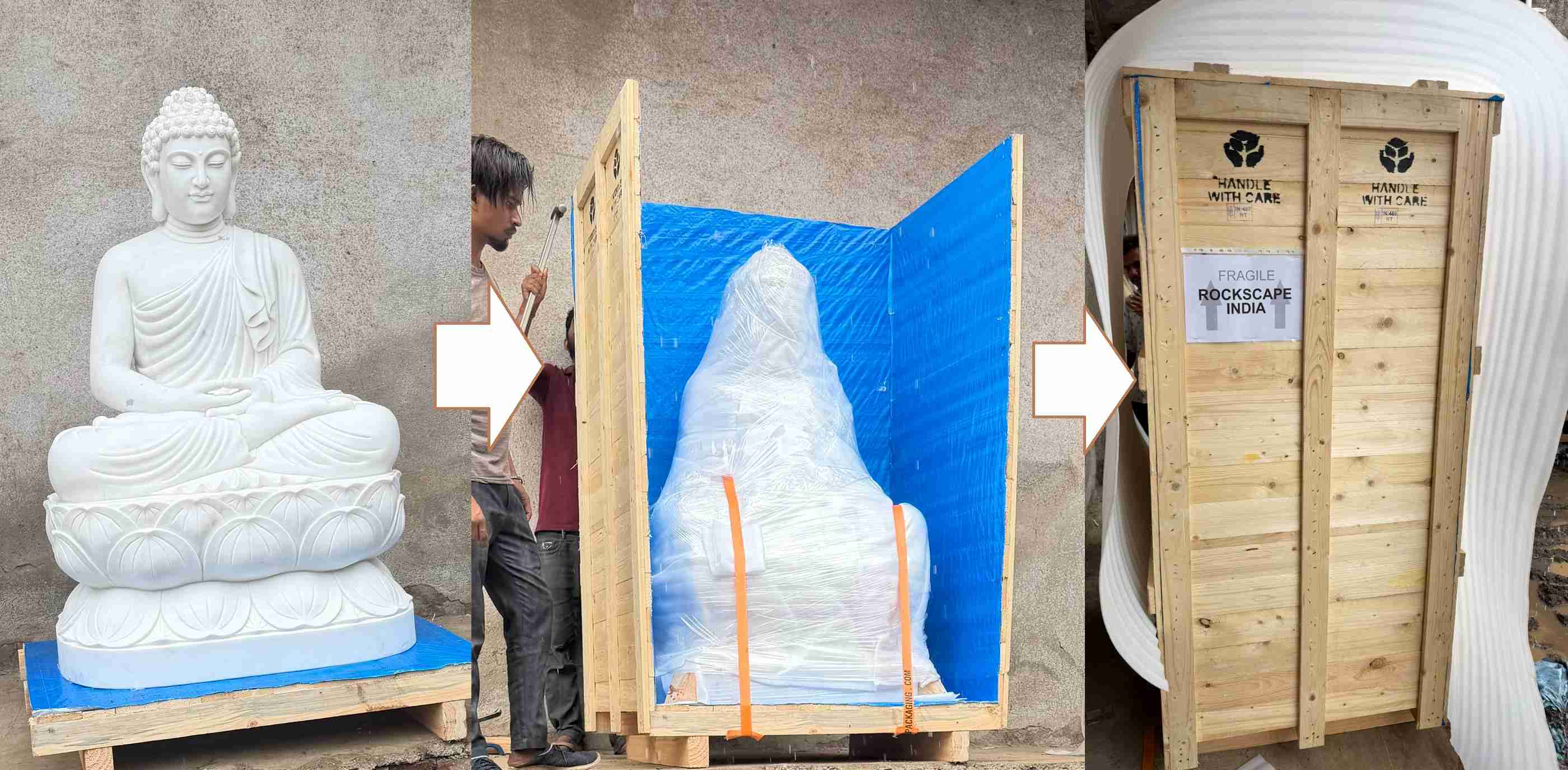

A hand-carved stone commission is heavy, valuable and often one of a kind. Sending it across an ocean raises fair questions: How is it protected? Who handles the shipping? What happens at customs? This article explains how large stone commissions travel from our workshops in India to homes and projects around the world, and what you can expect along the way.
Two routes: by sea or by air and courier
The way a piece travels depends mainly on its size and weight.
Smaller pieces: white-glove delivery
For smaller pieces such as a table top, a sculpture or a decorative object, we offer white-glove delivery worldwide. For deliveries within the USA, we have special arrangements with FedEx, DHL and UPS.
Larger commissions: by sea
Larger commissions and bespoke orders, such as screens, fountains, columns and large table tops, are shipped by sea. The piece is crated, packed and loaded into a container, so that it is protected from damage in transit.
Typical transit times
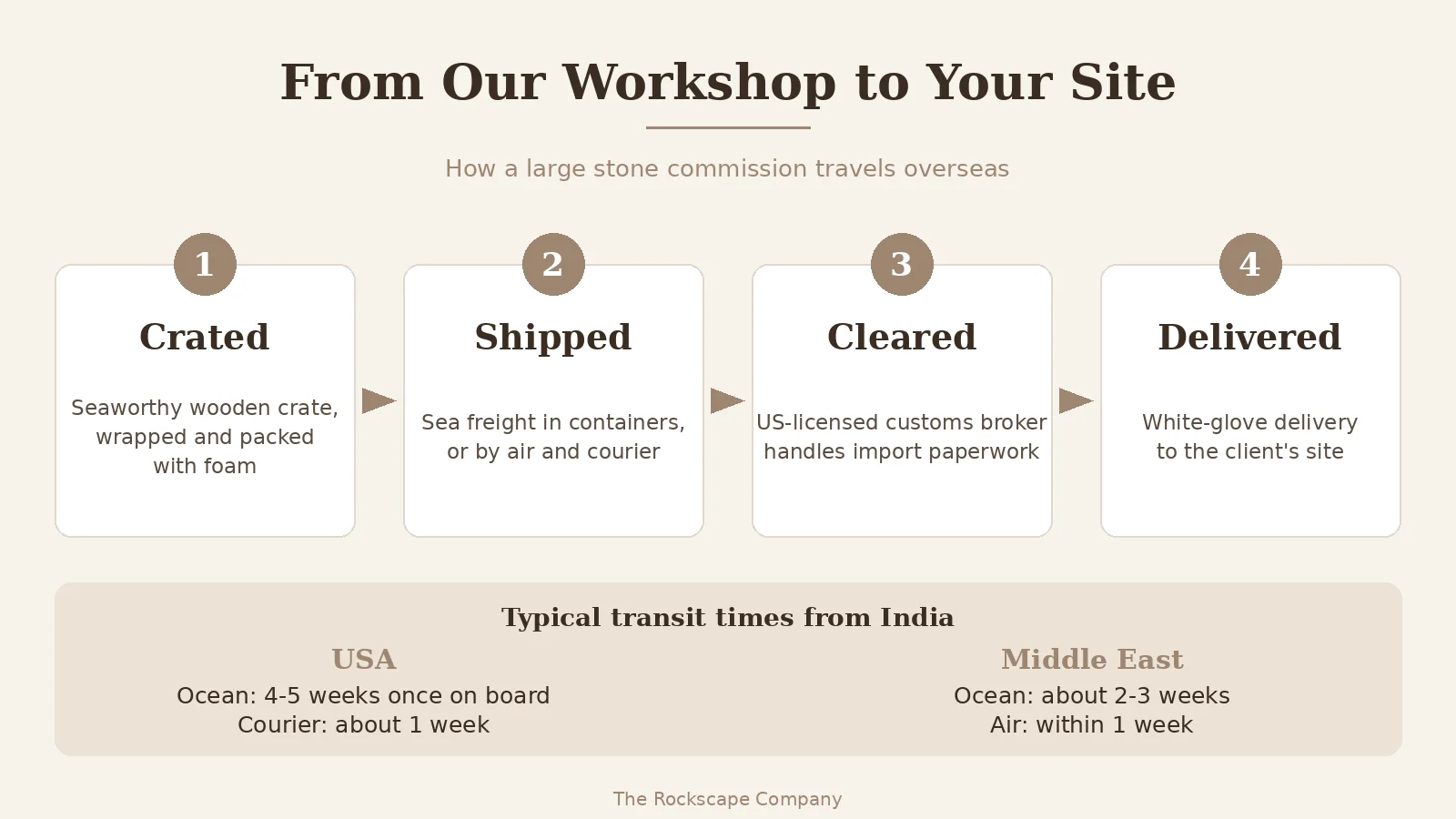
- To the USA by sea: generally four to five weeks once the goods are on board.
- To the USA by courier: generally about one week.
- To the Middle East by sea: about two to three weeks.
- To the Middle East by air: within one week.
Other destinations vary with the route and the season, so it is best to discuss your timeline once your commission is planned.

Crating and packing
Stone is strong but it is not forgiving. A hard knock to an edge or a corner can undo months of work, and a piece that shifts during a voyage can be damaged even when nothing hits it. That is why each and every piece sits in a strong, seaworthy wooden crate.
Inside the crate, the piece is wrapped and packed around with foam, so that any jerk during handling or the voyage is absorbed before it reaches the stone. The crates are built so that they can be moved easily from one place to another using a forklift.
A good crate does three things:
- Absorbs shocks with foam packed around the piece, so the finest details are protected.
- Holds the piece firmly, so it cannot move inside the crate.
- Survives handling, as crates are lifted, stacked and moved several times between workshop and destination, and can be shifted with a forklift.
Why sea freight in containers works for heavy stone
Sea freight is the usual choice for large and heavy pieces. The crates are loaded into a container and secured so that nothing can shift, which is an important part of avoiding transit damage. Once the container is sealed, the crates travel together until they reach the destination port and are cleared for delivery.
We handle the whole journey
Shipping stone overseas involves many steps: crating, transport to the port, ocean or air freight, customs clearance and delivery. We handle the whole journey of the goods until they are delivered to the client’s site, so you do not have to coordinate each stage yourself.
Customs clearance in the USA
For imports into the USA, a US-licensed customs broker handles all the paperwork for the import on behalf of the client, for an agreed, nominal fee. This takes the complexity of customs forms and filings out of your hands.
Import duties and taxes: who pays?
Import duties and taxes are charged by the destination country, so they are the responsibility of the client. Any import duties that apply are paid directly by the client to the service providers, because that part of the process is outside our control.
To avoid surprises:
- Ask early: check with your customs broker what duties and taxes apply to hand-carved stone.
- Budget for it: amounts vary by country and can change, so confirm the figures close to the time of shipping.
- Keep paperwork ready: customs clearance is faster when the documents are complete and consistent.
Shipping costs
Shipping costs are always quoted separately, once the full scope of the shipment has been ascertained. That includes the size and weight of the piece, the destination, and whether you would like it insured. You will see the shipping cost before you decide.
Transit insurance
A commission of this kind can be insured in transit. We can arrange insurance from our end at the client’s request, and the cost is included in the commission price.
When your shipment arrives, a few simple habits protect you further:
- Inspect the crate before it is unpacked, and photograph any visible damage.
- Note any damage on the delivery paperwork before you sign.
- Report any concern promptly, while the packaging and the evidence are still there.
Delivery and installation
White-glove delivery means the piece is handled carefully to the final location. Installation is carried out by the client’s local contractors, and we provide all the details they need for it. If you would like more support, a member of our team can be present on site for personalised supervision, at an agreed additional fee.
For heavy stone, it also helps to plan the practical side with your architect or contractor in advance:
- The route into the building, including doors, stairs and lifts.
- The floor or wall that will carry the weight.
- The equipment needed to lift and position the piece.
A planning checklist
- Tell us where the piece is going when you share your brief.
- Decide whether you would like the shipment insured.
- Confirm access and lifting arrangements with your architect and local contractor.
- Decide whether you would like a member of our team on site for supervision.
- Be ready for import duties, paid by you directly to the service providers.
- Inspect and photograph the shipment on arrival.
Frequently asked questions
Do you ship stone commissions overseas?
Yes. We offer white-glove delivery worldwide, and larger commissions are shipped by sea in containers.
How long does shipping take?
To the USA, ocean transit generally takes four to five weeks once the goods are on board, and courier about one week. To the Middle East, ocean transit takes about two to three weeks, and air freight within one week.
How are pieces protected in transit?
Each piece sits in a strong, seaworthy wooden crate, wrapped and packed with foam so that any jerk is absorbed. The crates can be moved with a forklift.
Can my shipment be insured?
Yes. We can arrange insurance from our end at your request, and the cost is included in the commission price.
How much does shipping cost?
Shipping costs are quoted separately, once all the scope is ascertained.
Who handles customs paperwork in the USA?
A US-licensed customs broker handles the import paperwork on the client’s behalf, for an agreed, nominal fee.
Who pays import duties?
The client. Any import duties that apply are paid directly by the client to the service providers, as that is outside our control.
Who installs the piece?
The client’s local contractors carry out the installation, and we provide all the details. A member of our team can be on site for personalised supervision, at an agreed additional fee.
Do you deliver to the USA?
Yes. For deliveries within the USA, we have special arrangements with FedEx, DHL and UPS, and we handle the journey until the goods reach your site.
Continue reading
Planning a commission for overseas?
Share what you have in mind, and where it will be installed. Begin a bespoke commission, or see the current pieces on Our Collections.