

Pietra Dura As An Heirloom: Why A Hand-Inlaid Table Outlives Trends
A fine Pietra Dura table does not belong to one owner for long. It belongs to a family. Pieces made in Florence centuries ago are still admired in museums and palaces, and the inlay in the Taj Mahal remains vivid after almost four centuries. That durability is what separates Pietra Dura from ordinary décor: it is made to be inherited.
An art mastered over a lifetime
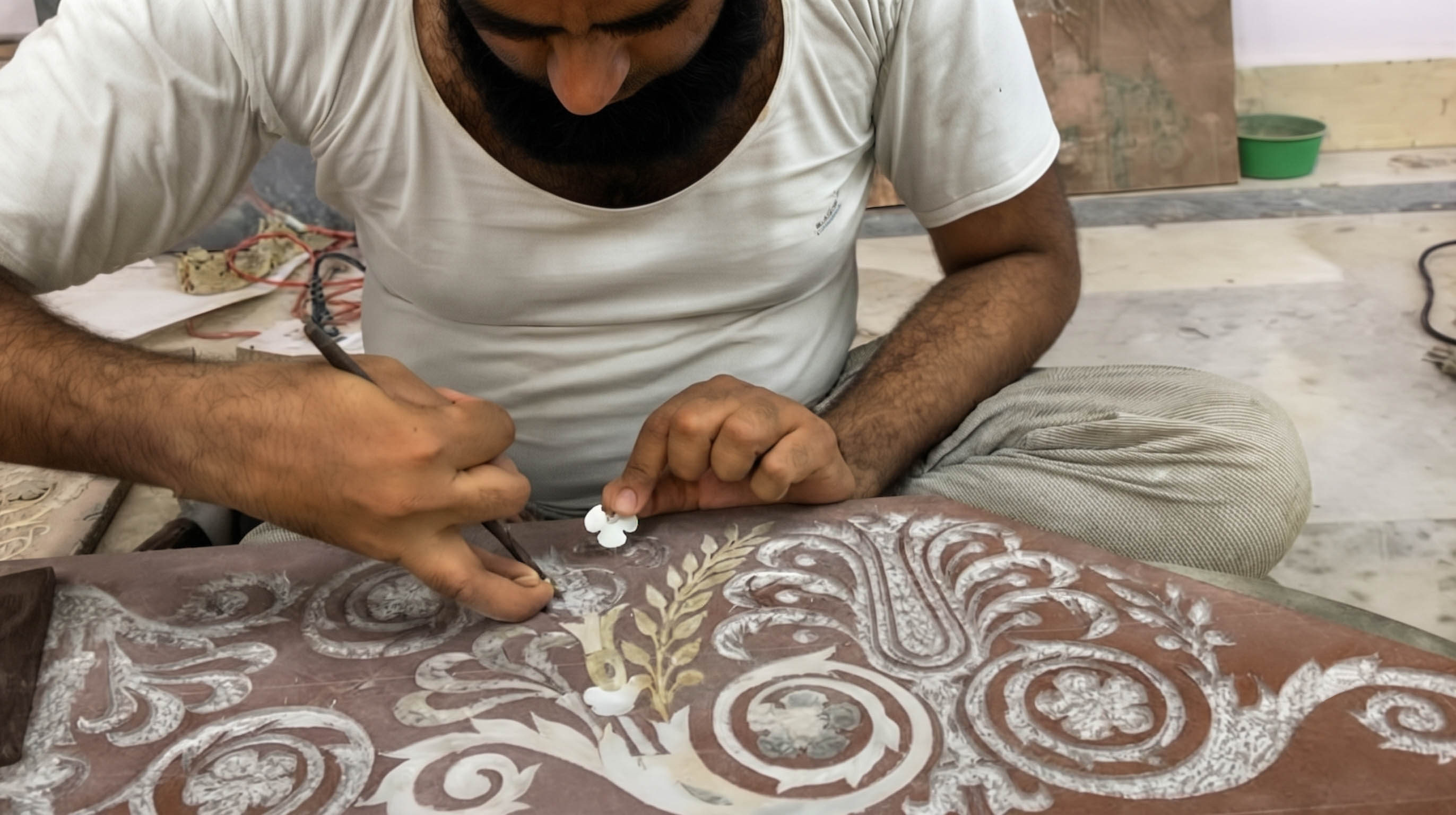
Pietre dure is not a skill learned in a season. It is an art one specialises in over years of practice, dedication and patience. An artisan spends long apprenticeship years learning to read stone: how it cuts, how its colour shifts across a slab, and how to choose the one piece that will become a petal, a leaf or a shadow. Each tiny fragment is cut and fitted by hand until it meets its neighbour with almost no visible seam.
That human time is part of the value. No machine reproduces the judgment of a master who knows exactly which stone, from which part of the rock, belongs in a particular corner of the design.
Why it lasts: hard stones and honest craft
The name means “hard stones”, and the choice is deliberate. Agate, jasper, onyx and carnelian are very hard materials, and they are set into a marble base and polished to a single flat surface. There is no paint to fade and no veneer to peel. With sensible care, the colours you see today are the colours your grandchildren will see.
Some softer stones, such as malachite and lapis lazuli, bring colours nothing else can match, and they ask for a little more care. A good maker will tell you which stones suit a piece that will be used daily.
A shared tradition: Florence to Agra
Pietra Dura began in Florence in the sixteenth century, and the Opificio delle Pietre Dure, founded in 1588, still carries the craft forward. In India, a related inlay tradition flourished under the Mughal emperors, most famously in the Taj Mahal, where flowers in coloured stone are set into white marble. Artisan families in Agra have kept the craft alive for generations. Read more about how a Pietra Dura table is made.

How to judge a piece worth keeping
If you are considering a piece as an heirloom, look closely at:
The fit
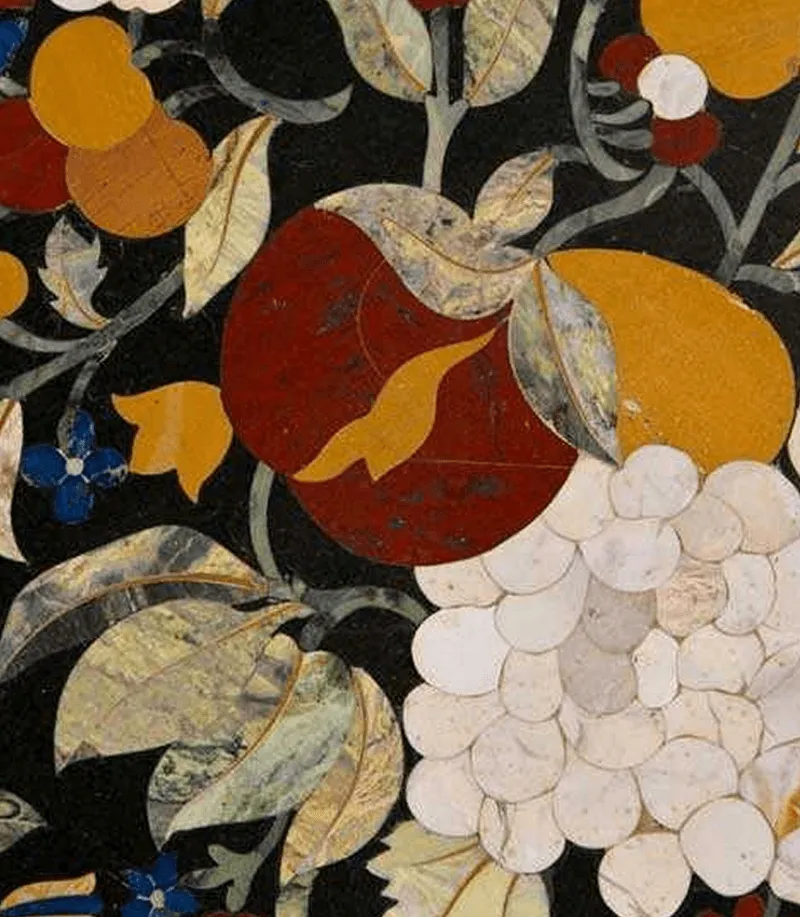
Run your eye along the joins between stones. In fine work they are barely visible, and the surface feels perfectly flat to the touch.
The colour
The shading in a petal or leaf should come from the natural variation within the stone itself, not from dye or paint.
The detail
Look at the finest parts of the design: stems, veins, small curves. This is where the artisan’s skill shows most.
The story behind it
Ask who made it, which stones were used, and how long it took. A piece with a clear story is easier to value and easier to pass on.
Looking after an heirloom
A Pietra Dura table asks for little, but it asks consistently:
- Wipe with a soft, dry or lightly damp cloth.
- Avoid acidic or harsh chemical cleaners, which can dull marble and damage the inlay.
- Use coasters and trivets, and clean spills promptly.
- Keep the piece away from strong heat and very rough handling.
Keeping a record for the next generation
Heirlooms are easier to inherit when they come with a record. Keep the design, the maker’s name, the stones used and the date of making. A short note about why the piece was commissioned makes it even more meaningful.
Commissioning a piece of your own
At The Rockscape Company, each Pietra Dura piece is made to order. The price depends on the intricacy of the craftsmanship, the semi-precious coloured stones required and the subject of the design. Straight geometric patterns are easier and quicker to make than complex floral patterns. Once we have a design, we can estimate both the time it needs and the budget.
We offer white-glove delivery worldwide, with special arrangements with FedEx, DHL and UPS for deliveries within the USA. Any import duties are paid directly by the client to the service providers. Larger commissions and bespoke orders are shipped by sea, crated and packed in containers to prevent damage in transit.
To see current pieces, visit Our Collections, or begin a bespoke commission and share what you have in mind.